
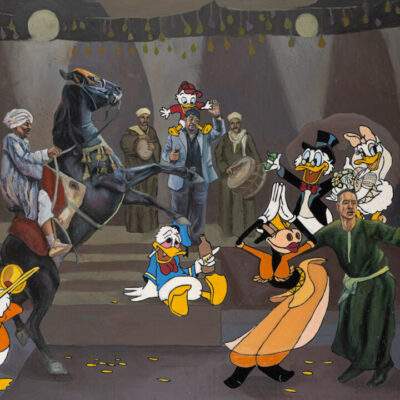
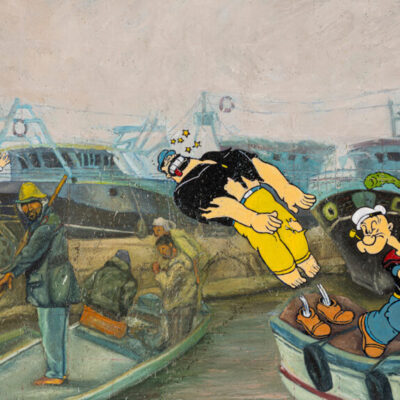
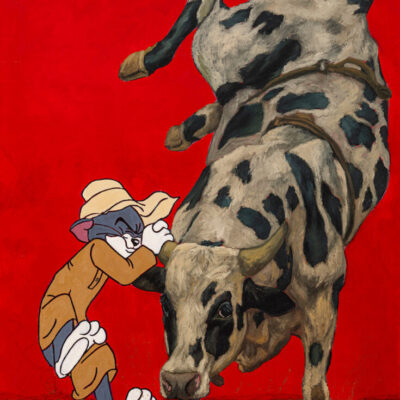
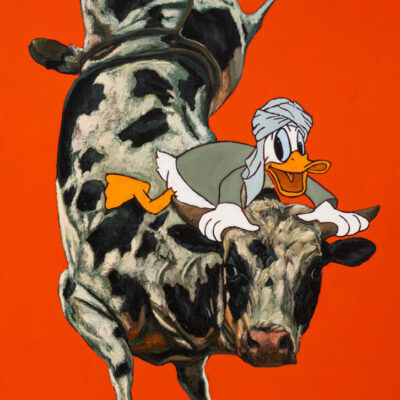
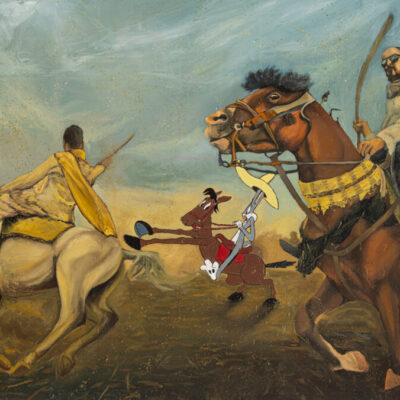
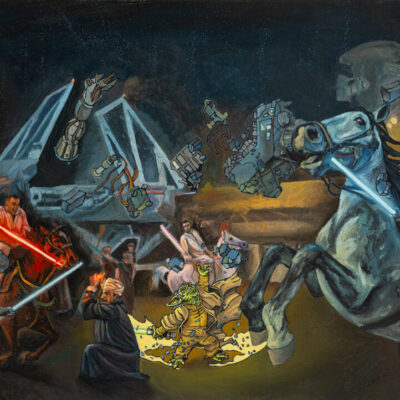
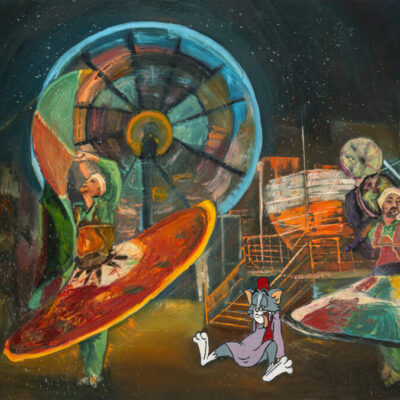
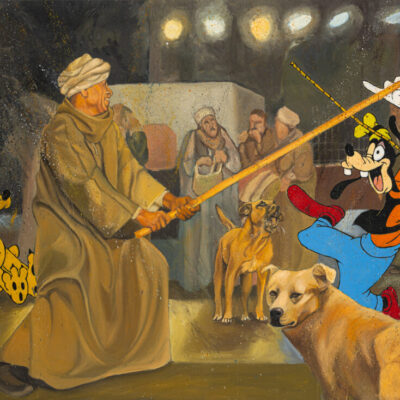
Folklacra is a coined title that merges “Folklore” and “Simulacra.” It brings together the inherited narratives, symbols, rituals, and visual language of folklore with the idea of simulacra—images or representations that recreate, transform, or echo reality. Folklacra therefore suggests a space where cultural memory and inherited traditions are reimagined through contemporary representations, blurring the boundaries between the authentic, the remembered, and the reconstructed.
explores the transformation of folklore within contemporary visual culture. Today, folklore is increasingly encountered through media and digital imagery, where it often appears as entertainment or as a consumable visual product. My interest is not in criticizing this transformation itself, but in questioning what is lost when folklore is reduced to its most recognizable images and detached from the cultural and historical contexts that gave it meaning.
The exhibition draws on the french philosopher Jean Baudrillard’s concept of simulation, where representations gradually become more familiar than the realities they once referred to. In this sense, folklore shifts from being a living cultural heritage to becoming a collection of visual icons that circulate, are reproduced, and consumed in ways that resemble the mechanisms of popular culture.
Throughout my practice, I investigate psychological dimensions by manipulating and reconstructing familiar contexts. Through exaggeration, contradiction, and irony, I create visual narratives that invite viewers to reconsider everyday assumptions and the systems of meaning embedded within contemporary culture. Cartoon-inspired imagery functions as a symbolic language that reinforces satire while reflecting social and philosophical concerns. Movement also plays a significant role in my work, introducing shifts in time and perception that encourage an active dialogue between the viewer and the artwork.
Folklacra invites viewers to reflect on the fragile boundary between cultural memory and visual consumption, questioning how traditions continue to evolve—and what remains of their original significance when their images become more familiar than their stories.
Folklacra XXI