Mass as Shelter On the Sculptural Practice of Reem Osama
There is a distant moment in human history, one that is difficult to locate precisely, when human beings first discovered that their existence could take form within matter. Before they learned to tell stories through words, and before they painted animals and gods on the walls of caves, there was an early intuition that the body could leave its trace within mass. Perhaps that was the first birth of sculpture.
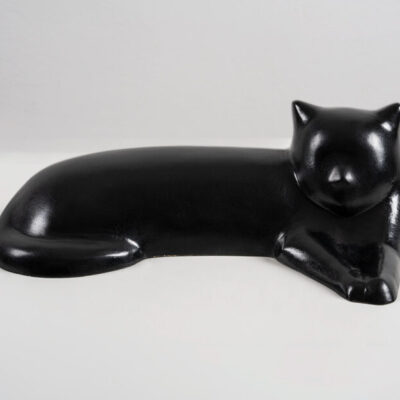
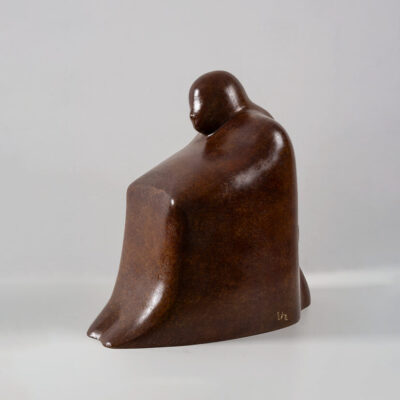
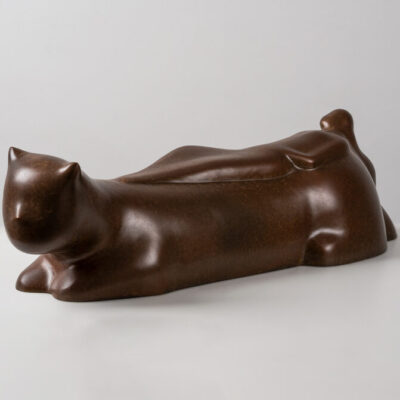
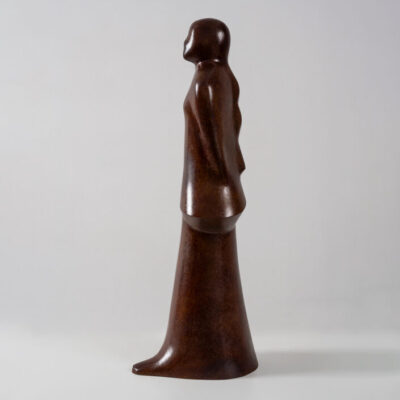
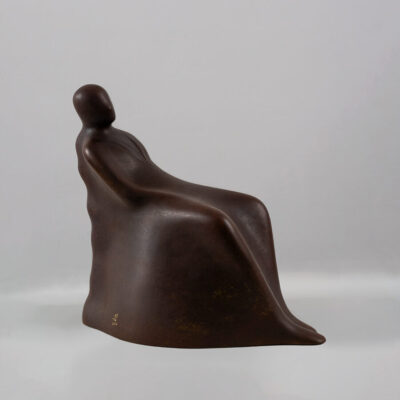
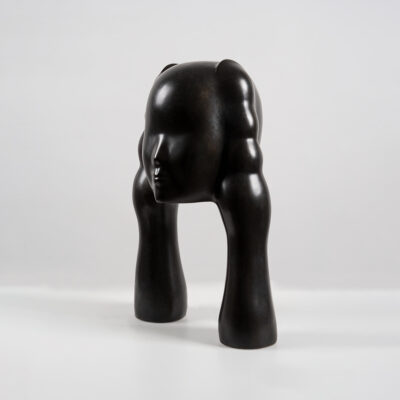
Since that moment, sculpture has remained one of the arts most closely tied to the very idea of human existence. Not simply because it reproduces the form of the body, but because it grants that body a place within matter, a place where time can momentarily settle, and where fleeting presence can become tangible. In the work of sculptor Reem Osama, this ancient question returns in a quiet yet concentrated form. The bodies that appear in her sculptures are not presented as fully descriptive figures or as precise anatomical representations. Rather, they seem to move gradually toward reduction. Details retreat, facial features dissolve, and lines bend inward until the body slowly transforms into a cohesive mass. This transformation is not merely a formal choice or a passing inclination toward abstraction. It is closer to an attempt to reach a deeper zone of representation,a zone where the body becomes a human condition rather than a fixed form. The bodies in Reem Osama’s sculptures do not seek movement or drama. They tend toward stillness, toward bending, sometimes toward folding inward. It is as if the form is searching for a delicate point of balance between the inner self and the surrounding world.
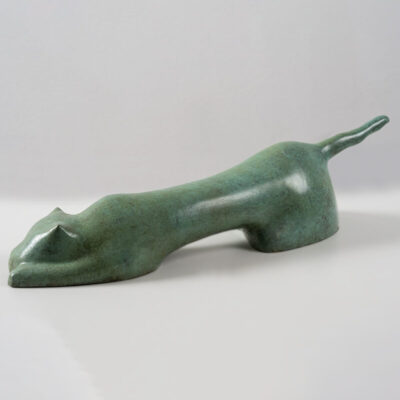
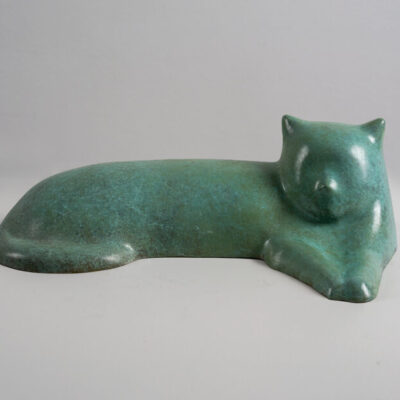
In some works, the body appears to shelter itself. In others, it becomes a quiet mass resting within space, almost as though it belonged to a nature older than humanity itself. Here, the body is no longer merely the subject of sculpture; it becomes a small existential experience, an experience related to the search for a place where human beings may dwell within the world.
Perhaps this is why reduction in Reem Osama’s work functions not as a withdrawal from expression, but as a path toward it. The fewer the details, the more capable the mass becomes of carrying meaning. A simple curve may hold an entire sense of human presence, and a silent mass may contain feelings of protection, solitude, or contemplation.
Within this space between body and mass, something essential occurs: the sculpture shifts from being an image to becoming a state.
The work no longer tells a specific story nor represents a particular individual. Instead, it opens a space where the viewer encounters a human condition that could belong to anyone. A moment of stillness, of inward turning, or of searching for a fragile balance between the body and the world.
Yet Reem Osama’s sculptural practice cannot be understood solely through its relationship with the body. It must also be read within the context of the long history of sculpture in Egypt. In this land, sculpture has never been merely one art among others; it has been an entire civilizational language. Thousands of years ago, ancient Egyptian sculptors knew how to grant the human body a sense of stability and permanence within time.
In those ancient statues, the body was not simply a description of anatomy; it was a means of giving time a visible form. Mass carried the idea of continuity and endurance, allowing human presence to extend beyond the limits of individual life.
What distinguishes Reem Osama’s work, however, is that it does not revisit this heritage as a formal reference. One does not encounter attempts to reproduce classical postures or revive ancient stylistic elements. What emerges instead is something more subtle: a deep sensitivity toward mass itself.
It is this sensitivity that allows the body to settle within matter, giving the form a sense of extended quietness. It is as though the distant history of Egyptian sculpture has shifted from the idea of immortality to the idea of listening. Mass no longer proclaims power or authority, as it often did in royal statuary, but becomes a space for contemplation.
Here lies the particularity of this practice. The bodies in Reem Osama’s sculptures do not confront the world so much as inhabit it. They do not announce themselves loudly; rather, they settle within it quietly, as though mass itself had become a shelter.
This sense of containment gives the works a distinctive human resonance. The sculpture does not present the body as heroic or triumphant, but as a being searching for equilibrium, one that carries its own vulnerability while attempting to find a place within the world without losing that vulnerability.
For this reason, these works appear to belong to a slower temporality than that of our contemporary moment. In a world saturated with images and overwhelmed by constant flows of information, sculpture proposes a different rhythm of perception, one grounded in slowness and contemplation.
Sculpture is, by nature, a slow art. Matter resists. Mass does not reveal its form all at once. Each work passes through a long sequence of small transformations: an adjustment here, a bend there, a portion removed, another retained. Within this prolonged process, the studio becomes more than simply a place of production.
The studio is where the first relationship between the artist and matter takes shape. There, among tools and silent blocks of clay, stone, or bronze, a language emerges, one that relies not on words, but on touch and time.
For the artist, the studio often becomes a place of chosen belonging. We are all born into circles of belonging we did not choose: family, homeland, language, and the early stories we hear in childhood. These elements shape us deeply, yet they are not always the places we consciously decide to inhabit.
At a certain moment in the life of an artist, another place appears, a place that suddenly feels more intimate than any other. For the sculptor, that place is often the studio. In Reem Osama’s practice, this discovery seems to have occurred early. Among the many forms of belonging life offers, she chose sculpture. She chose the body as her language, and mass as the medium through which she articulates her relationship with the world.
Yet this experience initially remains deeply private. It unfolds within the studio, away from the gaze of others. When the works leave that intimate space and enter the gallery, they begin a different life.
The exhibition does not present the sculptures simply as finished objects, but as traces of a long human process, a process that began in a quiet moment within the studio and culminated in a mass carrying the marks of the hand, the marks of time, and the imprint of a belonging chosen by the artist herself.
When viewers encounter these works, they do not confront statues alone. They encounter small moments of silence within space, moments that invite them to pause, to reconsider the relationship between body and matter, between interiority and exteriority, between human beings and the mass that gives them form.
Perhaps these works do not attempt to explain the world or provide definitive answers. Perhaps they simply attempt to create a small place within it, a place where the body might rest, if only for a brief moment.
Here, at this intersection between body and mass, between civilizational memory and personal experience, Reem Osama’s sculptures take shape: quiet masses carrying the trace of the human figure, and bodies that seem, at last, to have found a place where they may settle.
For here, mass is not merely a form. It is the house to which the body returns.
Self