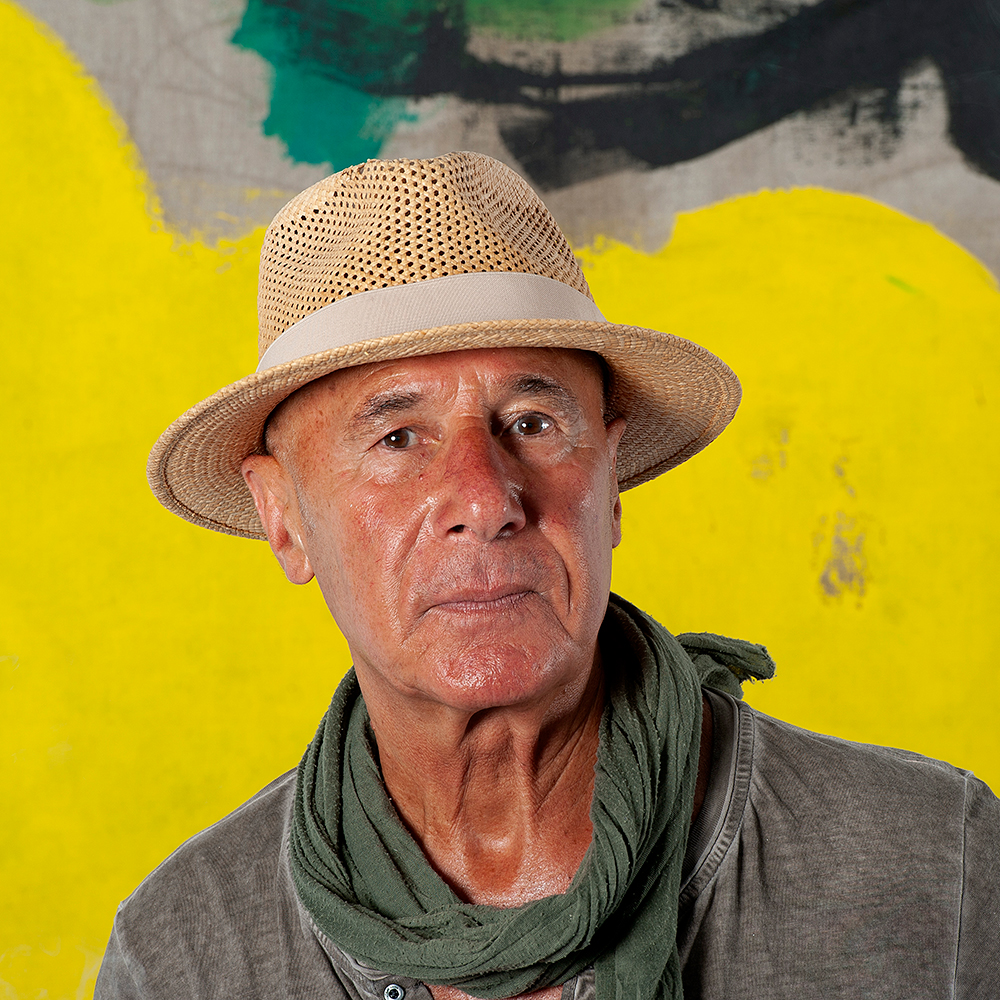
Bahram Hajou born in 1952, Deruna, Northern Syria. He is an internationally acclaimed German–Syrian Kurdish artist celebrated for his profound contributions to contemporary figurative painting. He lives and works between Germany and New York, USA.
After studying at the Münster department of the renowned Kunstakademie Düsseldorf, Hajou became a master student under Professor Norbert Tadeusz. Following a brief teaching period at the Gesamtschule Ückendorf in Gelsenkirchen, he dedicated himself fully to his artistic practice in the early 1990s, a pursuit that continues to define his life and legacy. Recognized as one of the foremost figurative painters of his generation,
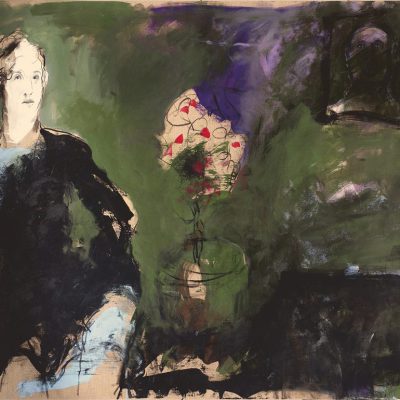
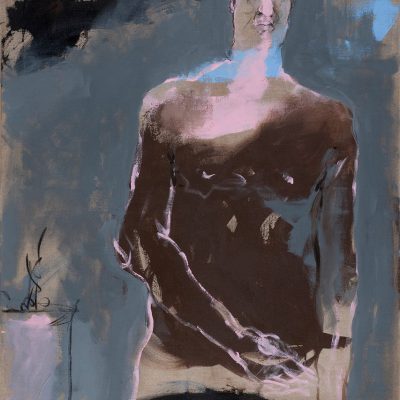
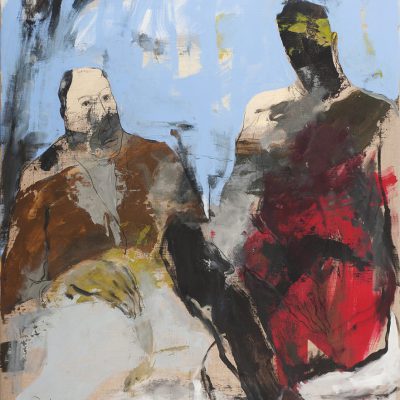
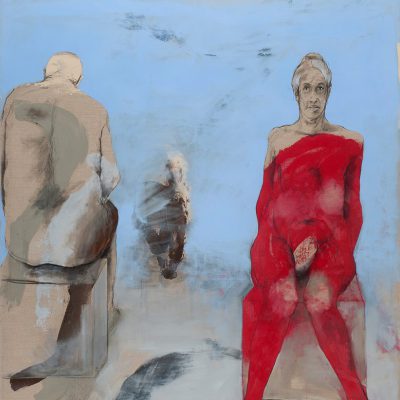
Hajou’s work delves deeply into the complexities of human relationships, both personal and collective. His paintings capture the subtle psychological tensions that define emotional connection. Through his meticulous observation and relentless self-analysis, Hajou reveals the fragility of communication and intimacy, his figures often suspended in quiet confrontation or introspection, embody the struggle to speak, to love, and to be understood. The emotional honesty of his compositions stripped of embellishment or artifice elicits an immediate, visceral response.
His artworks are challenging in their desire to initiate dialogue, an internal dialogue inside the viewer. The characters gaze at us or turn their backs on us. In both cases, they cinematically disregard the painting’s space, either entering or exiting it. This is facilitated by their natural height, precise anatomy, and the universal language of postures. They live here and there, silently but relentlessly questioning.
The human being in the center. More precisely: the entirety of being human, with a focus on challenges and shortcomings in (inter) human or even political discourse. Subtle and yet relentlessly direct. In striking and energetic compositions that instantly triggered interpretations, memories and consternation. Trepidation and melancholy were followed by acceptance, compassion and many sensations more, an emblem of human existence.
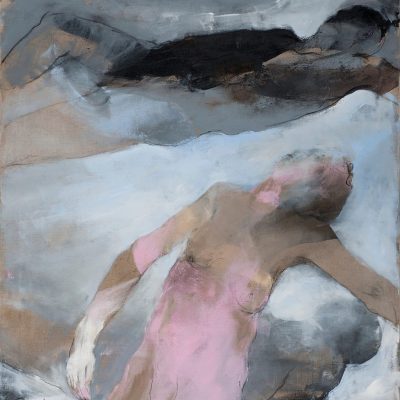
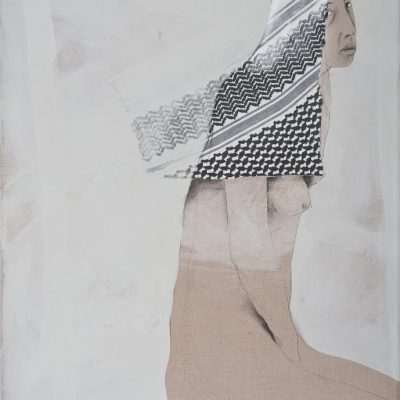
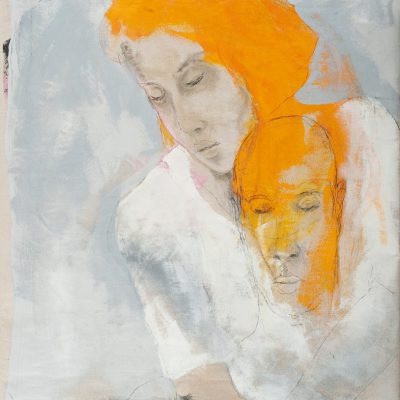
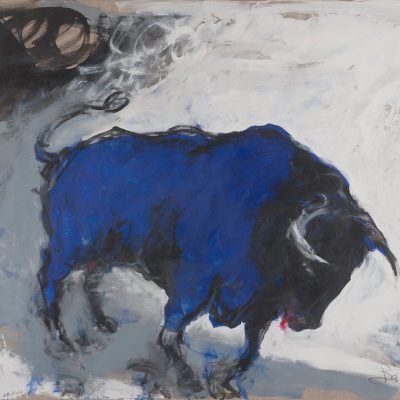
Bahram Hajou‘s large format works are created in a multi-layered process that reflects the depth of content immanent in the images. In the first step, Bahram Hajou lays the canvas on the floor and mixes acrylic paints with powder pigments on the canvas itself. With rags and brushes he spreads blobs of color and scatters sand or ash into the color areas. Hajou then hangs the canvas on the wall, rotates it several times and looks for inspiration.
In dialogue with the structures and islands of color, the image gradually emerges in layers. He sketches figures or heads with charcoal pencil, then gives them shape, sometimes translucent, sometimes pasty, or even paints over parts of them.
The statements are as complex as the layers of material and color themselves, sometimes even hidden behind them. Inadequacies and grievances are simultaneously unmasked and painted over. His pictorial worlds are of universal expressiveness in an internationally understandable (pictorial) language.
Hajou’s works are held in significant private and public collections worldwide, including the Mathaf: Arab Museum of Modern Art (Qatar), Art Hall Oldenburg (Germany), Deutsche Bank (Germany), the collection of Sheikh Rashid Al Khalifa (Bahrain), the collections of Albert O’hayon (USA) and Manfred Goubitz (Germany).
In 2014, Hajou was awarded the prestigious Henri Matisse Prize by the Château Musée Grimaldi in France, a recognition that brought him wide acclaim in the French art scene, including a full-page feature in Le Monde.


Untitled VIII