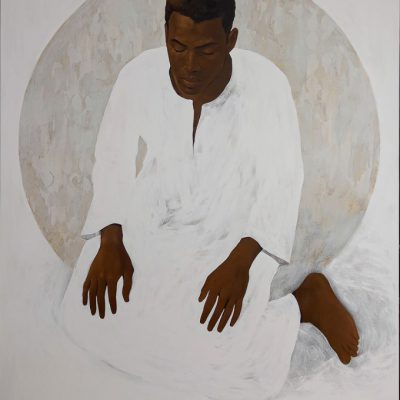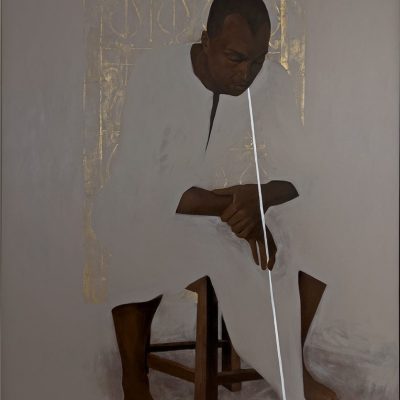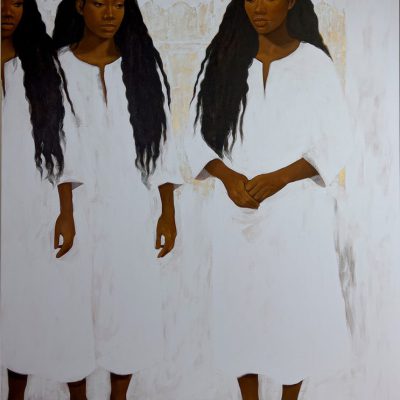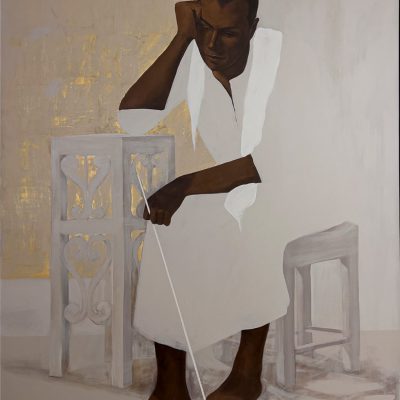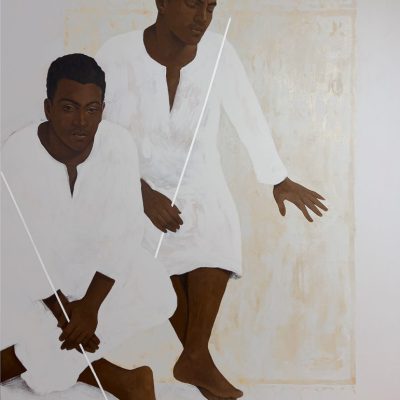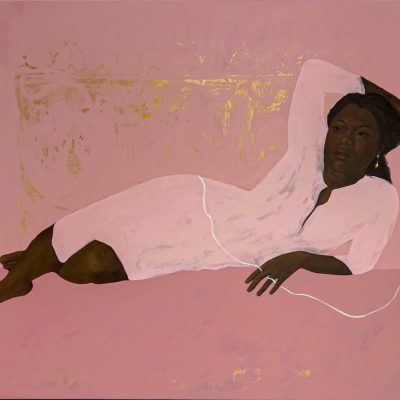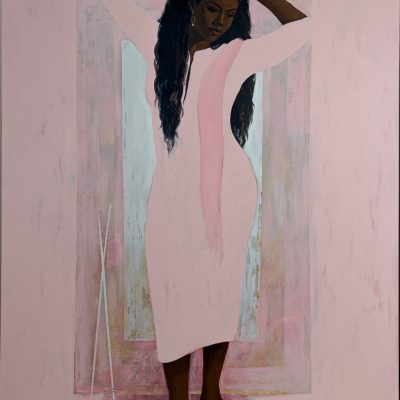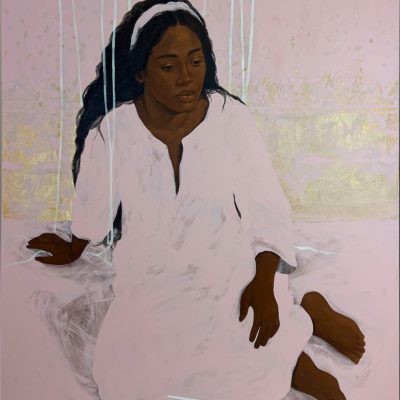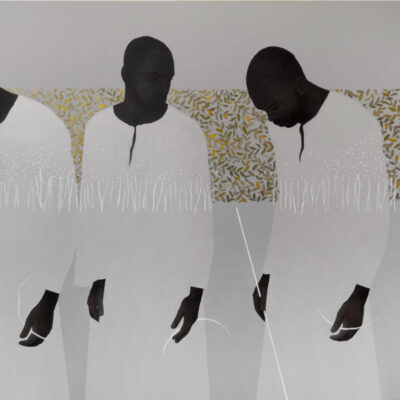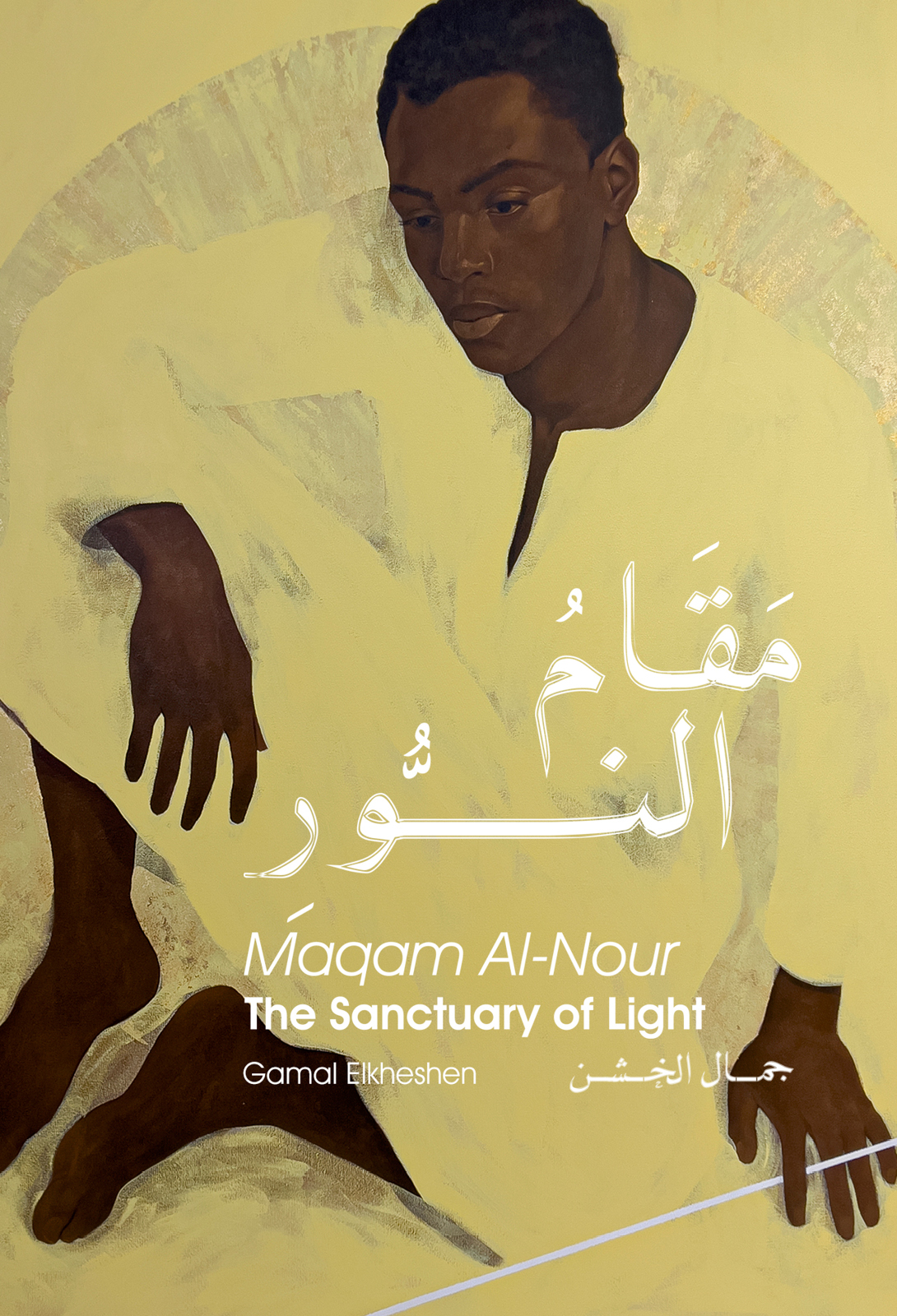
In a space suffused with gold, the human body stands—not as a mere painted form, but as a radiant being, overflowing with mystery and symbol, igniting light and becoming a source of vision. It is an open text, read by the eye and perceived by the soul; where the material trace entwines with the spiritual glow, and the gilded layers—marked by the scars of time and memory—interlace with halos of sanctity that summon the icons of history and the spirits of saints.
In this station, the body becomes a vessel of the greater spirit; a soul wearied by its ascent toward transcendence until it reaches a stillness that resembles revelation. Here, the “maqam” unfolds as a radiance beyond the boundaries of color, piercing through to the essence of meaning. Every face is a mirror, every texture a poem, every silence a call. These works do not merely portray the body as a physical form, but redefine it as a living memory, a spiritual map, and a journey from darkness to illumination. Gold here is not ornament, but accumulated time—witness to the soul’s passage through its trials. The white spaces open as windows onto other worlds, thresholds of passage, and realms of contemplation.
Maqam Al-Nour is a visual–spiritual journey, where the works encounter the essence of Sufism. Light ceases to be an instrument of vision and becomes the very subject of vision itself; a moment in which the body merges with the light, transforming into a station where the sanctity of human existence is revealed—features growing ever more luminous when seen by the heart before the eye.
In the beginning, there was light, and the body was its mirror. Since the instant light touched clay, humanity began its journey: searching within for a radiance to rival the sun, and for a shadow that would justify the night.
Maqam Al-Nour V